2026 FIFA World Cup Predictions | A Probabilistic Model Built on 500,000 Simulations
I built a data-driven 2026 World Cup prediction model and simulated the tournament with Monte Carlo 500,000 times. The report forecasts title probabilities, group-stage rankings, exact scorelines, knockout paths, and a projected Spain vs England final using team strength, squad quality, xG, and Monte Carlo simulation.
The 2026 FIFA World Cup will be the first edition with 48 teams, a larger group stage, a Round of 32, and a more complex third-place qualification system. That changes everything. A tournament with more teams creates more paths, more paths create more uncertainty, more uncertainty makes single-outcome predictions weak.
So I built a probabilistic model instead. The goal was simple:
Estimate how likely each team is to qualify from its group, reach each knockout round, make the final, and win the tournament.
The final forecast was generated using:
Model version: p3-2026-tournament-prediction-v1
Monte Carlo simulation count: 500,000
Seed: 2026
This is a probability model. It combines team strength, squad quality, expected goals, exact-score probabilities, knockout-path simulation, and historical calibration.
The Headline Result
The model identifies Spain as the leading title candidate.
Top 4 title probabilities:
- Spain 16.05%
- England 15.49%
- Argentina 14.78%
- France 11.70%
Together, Spain, England, Argentina, and France account for 58.02% of the simulated title probability.
That makes them the model’s clear elite contender tier. Spain leads the forecast because it combines 3 things better than the field:
- technical control
- defensive suppression
- knockout survivability
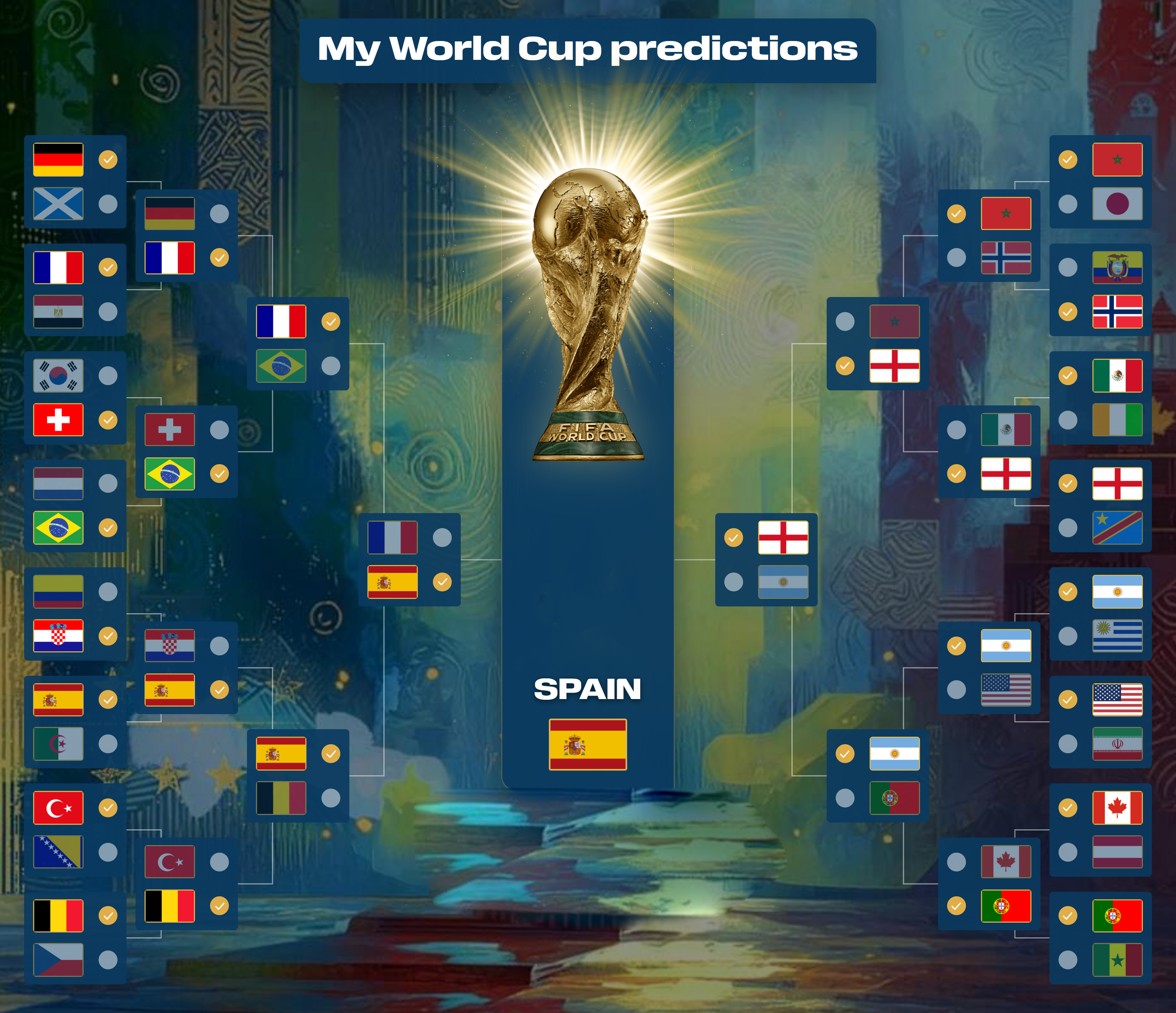
The model’s deterministic bracket also projects:
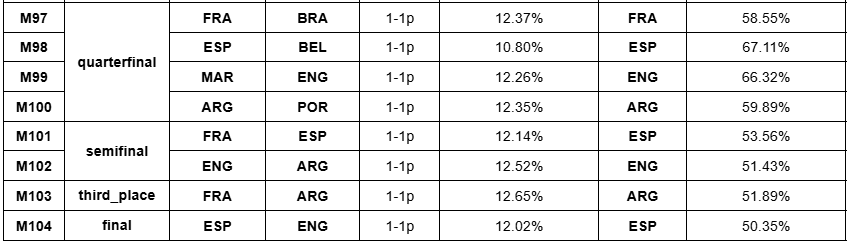
Final: Spain vs England
Score: 1-1
Winner: Spain on penalties
This means Spain has the strongest overall probability profile across 500,000 simulated tournament paths.
How the Model Works
The model has 5 main layers.
1. Team strength
Each team starts with a base strength score built from:
- FIFA ranking
- FIFA points
- Elo rating
- recent form
- goal-difference performance
- host and travel context
- qualification strength
This creates the foundation. It answers:
How strong is this country before squad-level adjustments?
2. Squad and production strength
The model then adds a production layer using squad-oriented variables.
These include:
- attack strength
- defense strength
- squad depth
- experience
- balance
- knockout profile
- set-piece quality
- penalty strength
- age profile
- injury pressure
This creates a match-ready team strength score. It answers:
How well does this team translate its quality into match outcomes?
3. Expected goals
Each match is converted into expected goals for both teams.
The match model accounts for:
- team strength difference
- attack vs opponent defense
- set-piece edge
- squad depth
- injury pressure
- host advantage
The output is an estimated xG value for each team.
4. Exact-score probabilities
The model then converts expected goals into exact-score probabilities.
It estimates scorelines from:
0-0
1-0
1-1
2-0
2-1
...
6-6
This explains why a scoreline with a probability around 12% can still be the most likely result. Football scores are naturally spread across many possible outcomes.
5. Tournament simulation
Finally, the full tournament is simulated 500,000 times.
Each simulation goes through:
- group-stage matches
- group rankings
- best third-place selection
- Round of 32 routing
- Round of 16
- quarterfinals
- semifinals
- 3rd-place match
- final
Knockout draws are resolved using a penalty/shootout model based on production strength and penalty score.
The final output is a probability distribution across the entire tournament.
2026 Title Probabilities
Here are the top title candidates from the model:
- Spain Group H 16.05%
- England Group L 15.49%
- Argentina Group J 14.78%
- France Group I 11.70%
- Portugal Group K 6.13%
- Germany Group E 5.69%
- Brazil Group C 5.00%
- Belgium Group G 3.84%
- Morocco Group C 3.05%
- Netherlands Group F 2.93%
- Norway Group I 1.91%
- Mexico Group A 1.83%
The title race is concentrated at the top. Spain, England, Argentina, and France form the real championship tier. Portugal, Germany, Brazil, Belgium, Morocco, and the Netherlands sit behind them as credible but lower-probability contenders.
Group-Stage Prediction Thesis
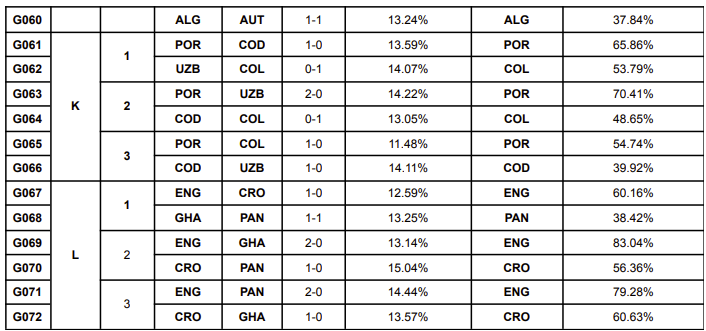
The model sees the group stage as a control-and-efficiency environment.
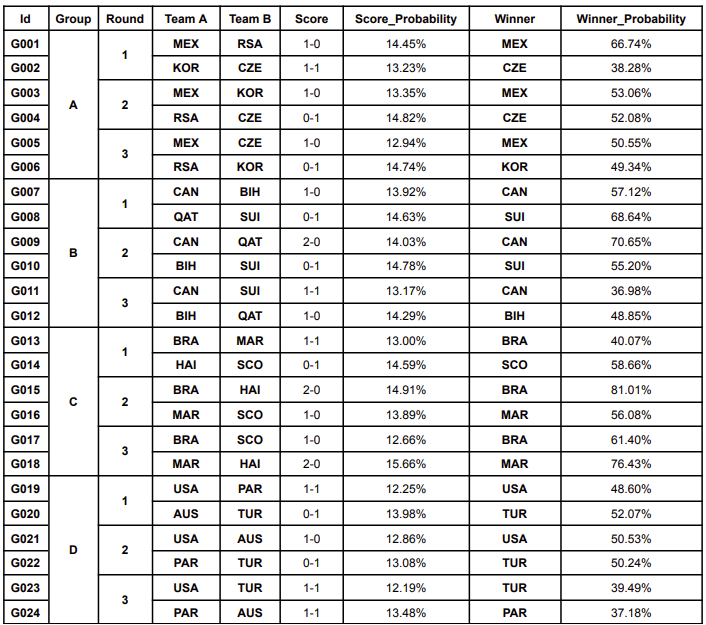
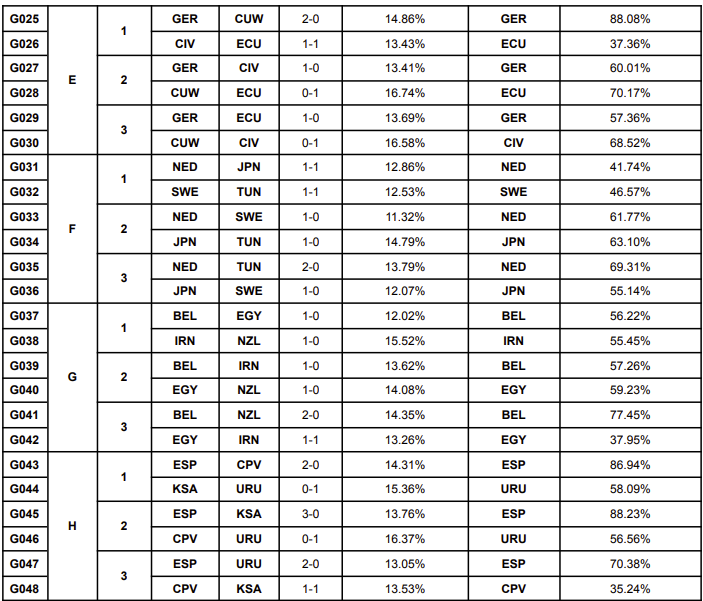
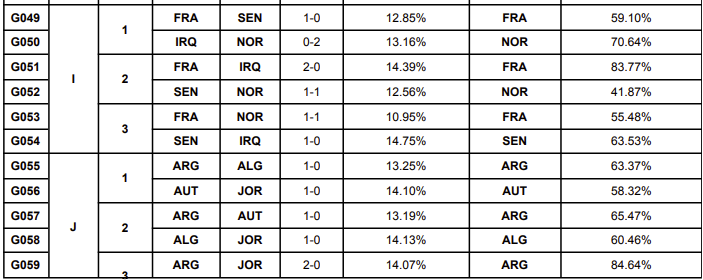
Most predicted scorelines cluster around:
1-0
1-1
2-0
0-1
This suggests a low-scoring tournament structure where strong teams separate through defensive control and efficient finishing rather than open scoring chaos.
The strongest group-stage profiles are:
Spain
England
Germany
Belgium
Argentina
Portugal
Mexico
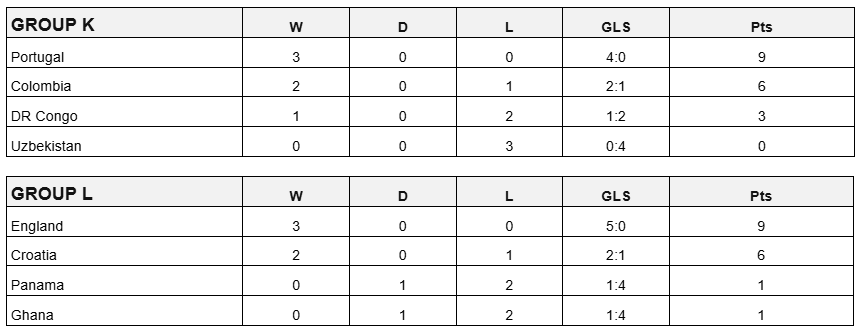
These teams project clean or near-clean group campaigns. Spain has the most dominant group profile in the deterministic table, finishing Group H with:
3 wins
0 draws
0 losses
7 goals scored
0 goals conceded
9 points
England also projects strongly, finishing Group L with:
3 wins
0 draws
0 losses
5 goals scored
0 goals conceded
9 points
The model rewards teams that combine attacking quality with defensive suppression.
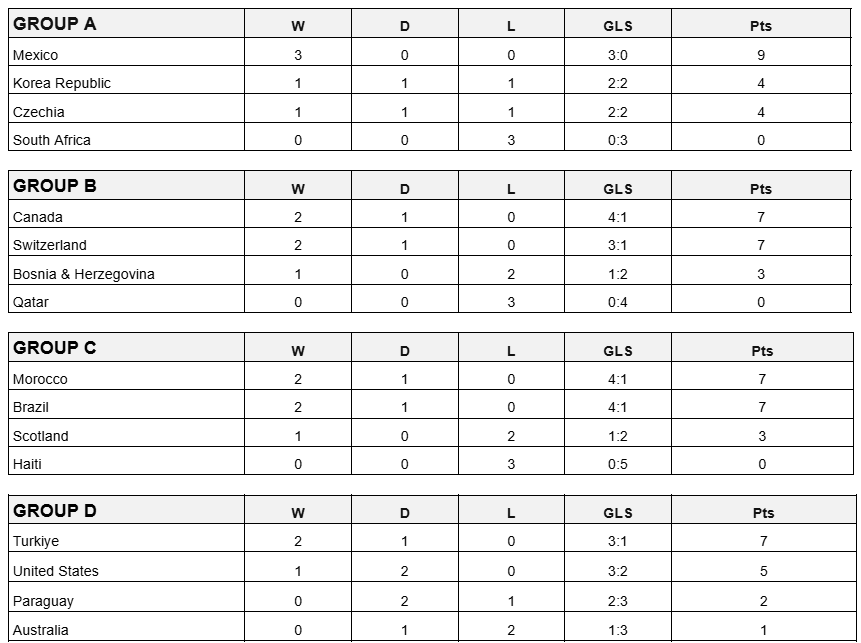
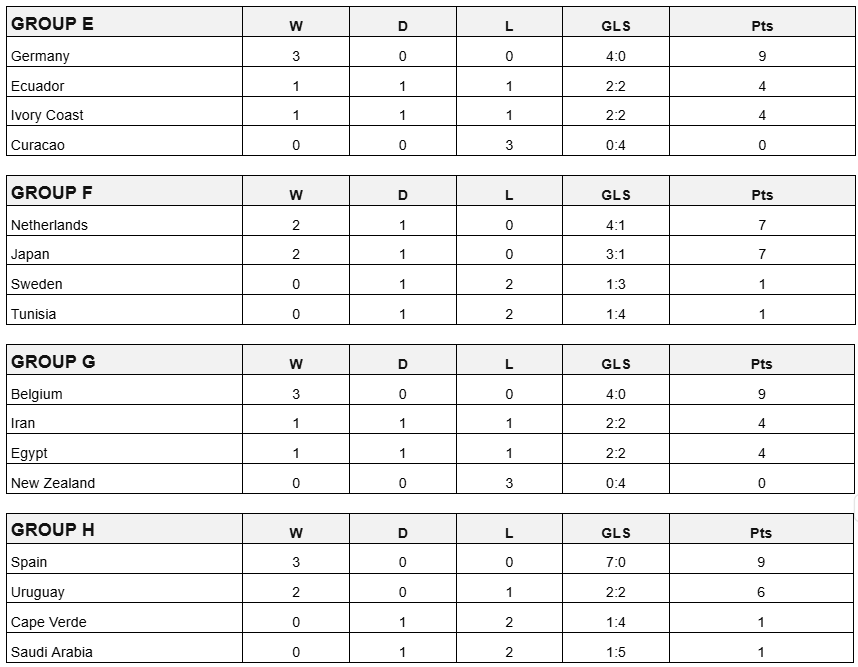
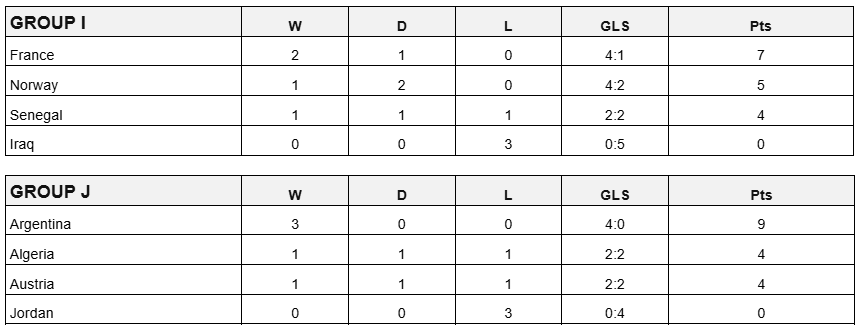
Group-Stage Match Predictions
The Best 3rd-Place Teams
The expanded 48-team format creates a major new pressure point: best third-place qualification
The model’s deterministic ranking sends these eight third-place teams into the Round of 32:
- Senegal Group I 4 Pts
- Austria Group J 4 Pts
- Czechia Group A 4 Pts
- Ivory Coast Group E 4 Pts
- Egypt Group G 4 Pts
- Scotland Group C 3 Pts
- DR Congo Group K 3 Pts
- Bosnia & Herzegovina Group B 3 Pts
This matters because the third-place system creates bracket volatility. A single group-stage goal can change which third-place teams qualify, where they are routed, and which favorites they face in the Round of 32.
That is one of the most important strategic features of the 2026 format.
Knockout Path Prediction
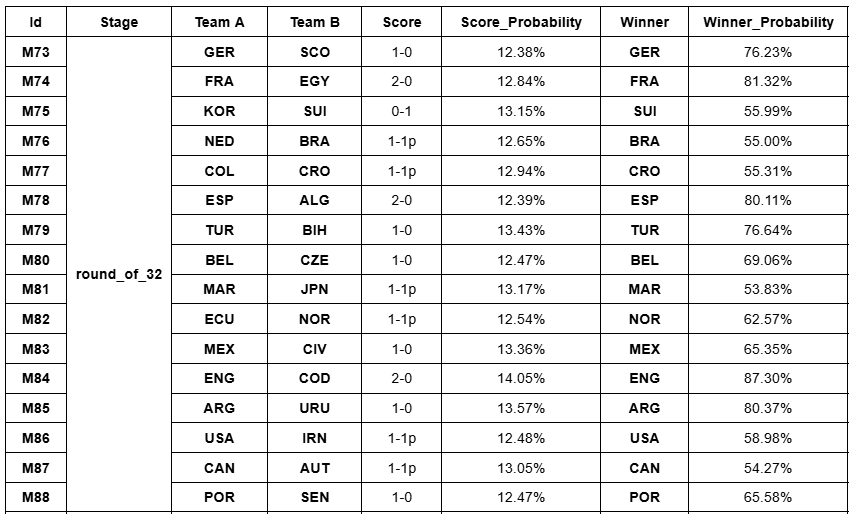
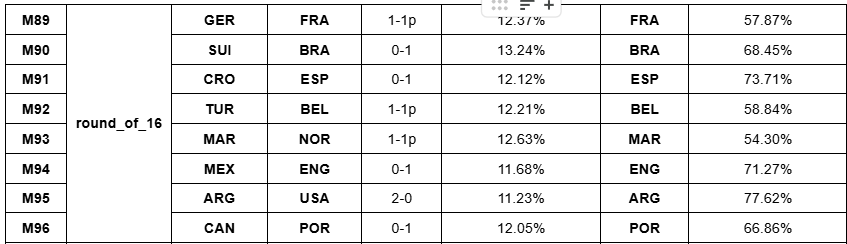
Once the tournament reaches the knockout phase, the model’s story changes. The group stage separates structural quality. The knockout stage compresses it.
In the Round of 32, elite teams are still strongly favored against lower-probability qualifiers. But from the quarterfinals onward, margins narrow sharply.
The model projects several elite matches going to penalties:
France vs Brazil
Spain vs Belgium
Morocco vs England
Argentina vs Portugal
France vs Spain
England vs Argentina
Spain vs England
This is the central knockout insight:
The later rounds are less about dominance and more about survival.
Full report
I prepared a full PDF report with:
- Model Methodology
- Data Architrecture
- Base Team Strength
- xG Model
- Exact-score model
- Historical calibration
- Title probabilities
- Group-stage Match Predictions
- Knockout Path Probabilities
- Limitations
- Disclaimer
You can download the full report here:
Download the full 2026 World Cup prediction report
Disclaimer
This report is provided for research, analytical, and informational purposes. The predictions, probabilities, scorelines, rankings, and tournament paths presented in this report are model-generated estimates based on the inputs, assumptions, and simulation process described in the methodology section. They represent probabilistic forecasts, not guarantees of future outcomes.
The report should be interpreted as a sports analytics exercise and forecasting study. It is not betting advice, financial advice, investment advice, or a recommendation to place wagers or make financial decisions based on the model outputs. Any use of the report for betting, gambling, trading, commercial decisions, media claims, or public commentary is the sole responsibility of the user. Football matches are uncertain events, and actual results may differ materially from the model’s projected probabilities.
The model creator makes no claim that the forecast will correctly predict match results, exact scores, group standings, knockout paths, or the tournament winner. All probabilities should be read in context, especially exact-score probabilities, which are spread across many possible outcomes.
Team names, competition references, and country identifiers are used for descriptive and analytical purposes only. This report is an independent forecasting project and is not affiliated with, endorsed by, sponsored by, or officially connected to FIFA, the FIFA World Cup, national federations, teams, players, or tournament organizers.
The methodology, assumptions, data structure, and outputs may evolve in future versions. Any updated model run should be clearly labeled with a model version, forecast date, simulation count, seed, and output freeze reference.